




Barbel fishing, Barbel angling and Barbel fisheries
Home Join Contacts News & Articles Events Did you know ? River records Gallery ACA Links

In the last five years, the Barbel Society has funded, or part-funded, the following projects, supporting both habitat work of real conservation value, and positive research into barbel and barbel fishery management;

Stocking of the River Dane; following pollution of the river, the BS made a grant to a local club to help establish barbel populations.

Stocking of the River Aire; the BS made a grant to a small club to help improve barbel populations on the river.

Stour Barbel Project; in partnership with local clubs and the EA, the Society raised over five thousand pounds towards habitat improvement works on the river, involving the reintroduction of gravels, and construction of fry bays.

Work on a weir at Throop was recently completed, with the help of 2K from the Barbel Society, and further works are planned.
The EA and the BS placed 9000 small barbel into the middle reaches of the river in the last three years as part of the project.

Arborfield Weir Project; the Society provided several thousand pounds worth of gravel and materials to support this EA led Award winning project on the River Loddon.

Bransford Project; The Society worked in partnership with the EA and consultants to skylight a stretch of the Teme near Worcester, bringing life-giving light to the river, as well as providing improved bank stability. Unstable willows were pollarded and coppiced, and woody debris placed in the river, along with planting of fresh willow pollards to retain bank collapse.

St Patricks Steam Project; the Society paid for a fish survey and report on this Thames tributary, and will support the resulting habitat works.

Bournemouth University Research Project; the Society has funded a major piece of research work, which involves a review of all current barbel research work and tank experiments into competition between barbel and other species, both of which have now been published. The University is also carrying out a scale reading study, using scales provided by the EA and BS members. This study will be the largest of its kind, and will provide information on growth rates and population structure for many UK rivers. A database of all available barbel-related research is to be compiled over time by the University. More work is planned in partnership with Queen Mary University of London on barbel diet, which will involve further analysis of scales and this will use complex techniques to establish the proportion of natural food, anglers baits and crayfish in barbel diet.

Barbel and gravels; the Society is helping to fund a PhD student researching the effects of barbel on gravel mobility and structure.

River Cherwell Project; the Society is working in partnership with the EA and The Wild Trout Trust, providing funding to provide instream cover for fish on this Thames tributary, in the form of large tree trunks, woody debris and live hanging willows.

Hampshire Avon habitat works; using funds raised in conjunction with the Avon Roach Project, the Society has removed redundant iron pilings from the river, and has several thousand pounds earmarked for further habitat improvements. Consent has been given to construct a fry bay for the benefit of coarse fish fry of all species, and this will be completed next Spring.

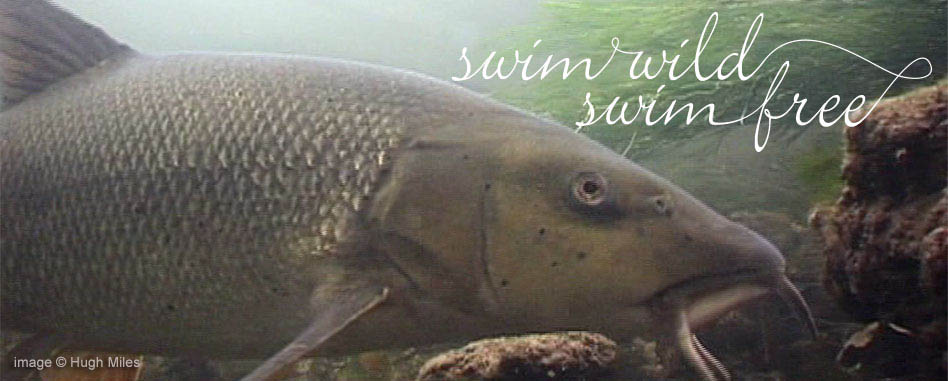
Barbel Society Handling Code; with help from film maker Hugh Miles, the Society will be producing a DVD and downloadable resources to help educate anglers in the safe handling of barbel, which will be provided free to clubs, tackle shops and other outlets.

All these activities require funding, which has been provided in the past by the generosity of major tackle manufacturers, tackle shops, fishing clubs, Barbel Society members and the angling community.

Pete Reading November 2012

1. To maintain regular contact with the Environment Agency in matters affecting our members.

2. To attend meetings of the relevant regional and national consultative bodies and maintain contact with N.A.F.A.C

3. To encourage Barbel Society membership on as many consultative bodies as practically possible.

4. To maintain regular contact with Barbel Society members who are also members of their Regional Fisheries Consultative or Advisory Councils and to collect twice each year a report from them.

5. To report to members of Advisory or Consultative Councils any concerns or advice regarding potential discussions.

6. To maintain contact with E.A. Fisheries Officers and influence any research that may be of interest to Barbel Society members.

7. With the help of others attempt to persuade the E.A. to stock barbel in suitable rivers and to dissuade from stocking barbel in stillwaters.

8. Provide members with material to counteract any anti-angling comments either in the Press or verbal.

9. Investigate any matters of Research and/or Conservation concerns reported and take the necessary action.

Introduction

The Barbel Society recognises that rivers are a precious natural resource, and are in increasing need of protection and conservation. The Society is broadly in support of the Environment Agency, Natural England and any other bodies who aim to preserve the biodiversity and sustainable natural populations of flora and fauna that are found in riverine habitats. Healthy barbel populations are intrinsically linked with healthy ecosystems, supporting a wide variety of wildlife, yet rivers are under pressure in terms of human demand for building, water resources and recreation that will need to be carefully considered and controlled.

Flood defence, land use and planning

The Barbel Society supports the stance of the Environment Agency in advising extreme caution with regard to developments in natural floodplains, which can have drastic consequences on both riverine habitats and human habitation or activity. Unnatural structures, such as weirs, dams and flood barriers should to be designed to have minimum impact on river flow and passage of migratory fish and fry.

A natural variety of river habitats,including bends, riffles, pools and overhanging trees, should be maintained as much as possible.

Water quality

The Barbel Society supports the work of the Environment Agency in monitoring and enforcing legislation regarding water quality, and expects a more vigorous pursuit of polluters and tightening of consents. The Society supports the Angling Trust and any other bodies devoted to ensuring high quality water in our rivers, and will aim to educate it's members on maintaining vigilance regarding chemical pollution.

Water resources

Abstraction for domestic, agricultural and industrial use is likely to increase with increasing population both from borehole sources and directly from rivers. Consequent reduction in flow rates are potentially highly damaging, and the Barbel Society supports the Environment Agency in it’s efforts to manage and minimise demand.

The Society aims to educate it’s members in steps they can take to minimise domestic water usage.

Navigation

The Barbel Society is concerned that unrestricted boat traffic can have serious negative effect on water quality and wildlife. Pollution from oil and fuel and disturbance to wildlife by noise, visual impact and wash are all clearly detrimental to the natural riverine environment.
Turbidity caused by motorised boat traffic has been of real concern on rivers like the Kennet, where canalised sections have an impact on the flow and water quality downstream.

The Society is opposed to increases in boat traffic on rivers, and expects increasing usage to be tightly controlled.

Rivers Close Season

The Barbel Society supports the retention of the current Close Season on rivers, for practical, conservation and moral/ethical reasons.

1. River fish populations are much more difficult to manage than those in enclosed waters; they are subject to greater pressure from pollution and habitat degredation,and have to be naturally self-sustaining. Any disturbance of spawning shoals by anglers or other water users can only have a detrimental effect on spawning success and recruitment.
The Society view is that all coarse fish, particularly before, after or during spawning, benefit from a cessation of angling pressure, and that all riverside wildlife both flora and fauna benefit from a period of relatively undisturbed peace at times of springtime regeneration and breeding.

2.The moral and ethical arguments in favour of a rivers close season are felt strongly by many anglers, who may also have been opposed to the abolition of the stillwater close season. The Barbel Society respects and supports the view that a period of respectful relaxation is a good thing for both fish and the angler, as well as anglings public image.

3.Fish stocks in rivers are essentially shared between clubs or riparian owners with adjoining or opposite bank fishing, which would mean that an enormously complex and unfair situation would arise where those who wished to retain a close season would find it difficult to do so. Management and policing in such situations would be impossible to maintain.

Stillwater barbel

The Barbel Society remains resolutely opposed to the stocking of barbel in stillwaters.
The barbel is clearly highly adapted to life in flowing water with consistently low temperatures and high oxygen levels, and requires great care on return to the water after capture.

There is little evidence that barbel already stocked into stillwaters thrive or survive in the long term, or that there is a strong or genuine demand from anglers for stillwater barbel. The Society urges fishery owners to refrain from stocking barbel into stillwaters, and also expects the Environment Agency to review their policy of allowing such stockings.

The moral and ethical arguments against stillwater barbel are also considerable.
Putting barbel into lakes is like keeping kestrels in a chicken coop.

#top
History Aims & Objectives Committee Regions Fisheries Handling Code Research & Conservation